Jun 26, 2026News & Insights
How to Choose the Right Hollow Metal Door for Commercial Buildings
We provide comprehensive enterprise management consulting services to help businesses optimize processes, improve efficiency, and reduce costs.
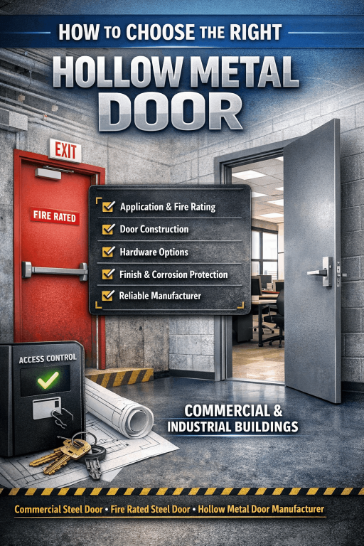
When selecting doors for commercial and industrial buildings, hollow metal doors are one of the most reliable and widely used options. Known for their strength, durability, and fire resistance, hollow metal doors are commonly installed in hospitals, schools, offices, warehouses, shopping malls, and factories.
However, choosing the right hollow metal door requires more than simply selecting a steel door. Factors such as fire rating, door construction, hardware compatibility, and environmental conditions all play an important role.
In this guide, we will explain how to choose the right hollow metal door for your project and what factors contractors, architects, and building owners should consider.
1. Understand the Application Environment
The first step in selecting the correct hollow metal door is understanding where it will be installed. Different buildings and locations require different door specifications.
For example:
- Industrial factories and warehouses require heavy-duty steel doors designed for high traffic and frequent operation.
- Hospitals and healthcare facilities require doors that meet strict safety standards and often include vision panels for visibility.
- Schools and universities need durable doors that can withstand daily heavy use.
- Commercial buildings and shopping malls often require both durability and aesthetic appearance.
Choosing the right commercial steel door for the environment ensures long-term performance and reduces maintenance costs.
2. Check Fire Rating Requirements
Fire safety is one of the most important considerations when selecting a fire rated hollow metal door. Many commercial buildings are required by building codes to install fire-rated doors in certain areas.
A fire rated steel door is designed to prevent the spread of fire and smoke for a specific amount of time, allowing occupants to safely evacuate.
Common fire ratings include:
- 45-minute fire rated door
- 60-minute fire rated door
- 90-minute fire rated door
- 180-minute (3-hour) fire rated door
Fire-rated doors are typically installed in areas such as:
- Stairwells
- Emergency exits
- Corridors
- Mechanical rooms
- Electrical rooms
When selecting a fire-rated door, make sure the door, frame, and hardware are all properly tested and certified according to recognized fire testing standards.
A certified fire rated hollow metal door manufacturer will always provide the necessary certification documents for compliance.
3. Evaluate Door Construction and Materials
The internal construction of a hollow metal door directly affects its durability, insulation performance, and fire resistance.
Key construction features include:
Steel Thickness (Gauge)
Steel doors are available in different gauges. A lower gauge number means thicker steel.
Common options include:
- 20 gauge steel door – light duty
- 18 gauge steel door – standard commercial use
- 16 gauge steel door – heavy duty industrial use
For high-traffic buildings such as hospitals, factories, or schools, 18 gauge or 16 gauge hollow metal doors are typically recommended.
Door Core Material
The internal core of the door affects both strength and insulation.
Common core options include:
- Honeycomb core – lightweight and economical
- Polystyrene core – better insulation performance
- Mineral core – required for fire-rated doors
Choosing the correct core material ensures the door meets the required performance standards.
Reinforced Hardware Areas
High-quality commercial hollow metal doors include reinforcement plates for hardware installation such as hinges, locks, and panic bars. This reinforcement prevents deformation and extends the door’s service life.
4. Choose the Right Door Hardware
Door hardware plays a major role in the functionality and safety of a hollow metal door system.
Common hardware options include:
Panic Bars
Also known as exit devices, panic bars allow people to quickly exit a building during an emergency. These are commonly used in:
- Hospitals
- Schools
- Shopping malls
- Public buildings
Door Closers
Door closers ensure that doors automatically close after being opened, which is especially important for fire rated doors.
Vision Panels
Vision panels improve visibility and safety by allowing people to see through the door before opening it. These are commonly installed in hospital doors and school doors.
Access Control Systems
Modern commercial buildings often use electronic locks, key cards, or biometric access systems integrated with hollow metal doors for better security.
Selecting compatible hardware ensures the door system operates smoothly and safely.
5. Consider Surface Finish and Corrosion Protection
Surface finishing plays an important role in the appearance and durability of steel doors, especially in humid or outdoor environments.
Common finishes include:
Powder Coating
Powder coating provides a durable, scratch-resistant surface that is widely used in commercial steel doors.
Galvanized Steel
Galvanized hollow metal doors provide extra protection against corrosion and are ideal for coastal or humid environments.
Primed Steel Doors
Primed doors are factory-coated with primer and can be painted to match the building’s interior or exterior design.
A high-quality finish not only enhances the appearance of the door but also extends its lifespan.
6. Select a Reliable Hollow Metal Door Manufacturer
Choosing the right hollow metal door manufacturer is just as important as selecting the door itself. A reliable manufacturer ensures consistent quality, proper certification, and professional support.
When evaluating a supplier, consider the following:
- Manufacturing experience in commercial steel doors
- Availability of fire-rated certifications
- Customization capabilities
- Export experience for international projects
- Technical support for installation
A professional hollow metal door supplier can also help recommend the best door specifications for your project.
7. Consider Customization Options
Many projects require custom hollow metal doors to meet specific architectural or functional requirements.
Common customization options include:
- Custom door sizes
- Vision panels
- Louvers for ventilation
- Stainless steel finishes
- Different hardware preparations
Customization ensures the door fits perfectly into the building design and operational requirements.
Conclusion
Choosing the right hollow metal door requires careful evaluation of several factors including installation environment, fire rating requirements, door construction, hardware options, surface finish, and manufacturer reliability.
For commercial buildings, hospitals, schools, factories, and shopping centers, hollow metal doors provide an ideal combination of durability, safety, and long-term performance.
By working with a professional hollow metal door manufacturer, wholesaler, contractors and building owners can ensure their doors meet both safety standards and project requirements.
If you are looking for high-quality hollow metal doors, fire rated steel doors, or commercial steel door solutions, partnering with an experienced supplier will help ensure your project’s success.